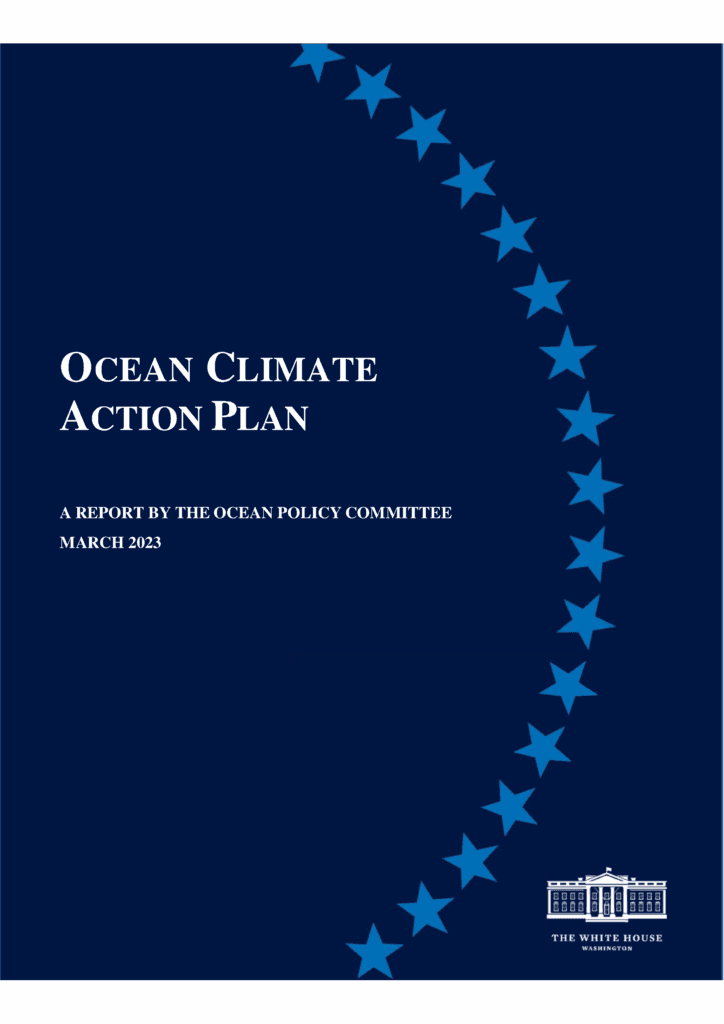
Ocean Climate Action Plan
DOWNLOADUnderstanding mCDR and Ocean Health
Marine carbon dioxide removal (mCDR) can be a naturally occurring or mechanical, human assisted, process that helps increase the rate of carbon dioxide uptake into the ocean or storage of organic carbon away from contact with the atmosphere. Nature-based solutions can include habitat restoration or reservation while pH adjustments to sewage effluent waters can be an example of a human-assisted process.
U.S. federal agencies, academic researchers, industry, nonprofits and other entities are researching marine carbon dioxide removal (mCDR) to investigate their potential to mitigate the impacts of acidification and climate change. Approaches for mCDR, such as ocean alkalinity enhancement and deep ocean biomass sinking, may remove excess carbon dioxide from the atmosphere and store it for long periods of time in the ocean. Research is needed to better understand the effectiveness of these techniques for mitigating the impacts of climate change.
mCDR Permitting Programs
From The Environmental Protection Agency
 Click here for EPA Resources
The Permitting Process for mCDR Activities
The permitting process includes engagement with various local, state, Tribal and federal entities as appropriate, including those that administer federal statutes such as the Endangered Species Act, Section 401 of the Clean Water Act, and Coastal Zone Management Act. The public may also participate in opportunities for public review and comment on proposed MPRSA and Clean Water Act NPDES permits for these activities. Proposed permits and supporting information for MPRSA permits will be docketed on Regulations.gov and updates will be added on the EPA’s MPRSA website.
Researchers and organizations considering ocean-based mCDR activities should contact the EPA with questions about permitting and to discuss how to apply for a permit by emailing EPAmarineCDR@epa.gov.

Get Involved
If you are interested in learning more about MACAN and the work we do, please sign up for our monthly newsletter. You can also read our 2024 to 2028 Work Plan.


The Mid-Atlantic Coastal Acidification Network. All Rights Reserved.