
Celebrating 10 Years of MACAN
October 2026 marks 10 years of the Mid-Atlantic Coastal Acidification Network. To celebrate, we are highlighting MACAN’s past coordinators and their contributions over the past decade. In 2009, the Federal Ocean Acidification Research and Monitoring Act established the National Oceanic and Atmospheric Administration Ocean Acidification Program (NOAA OAP). In the following years, regional Coastal Acidification Networks were established to build scientific capacity and develop regionally relevant responses to ocean and coastal acidification in each region.
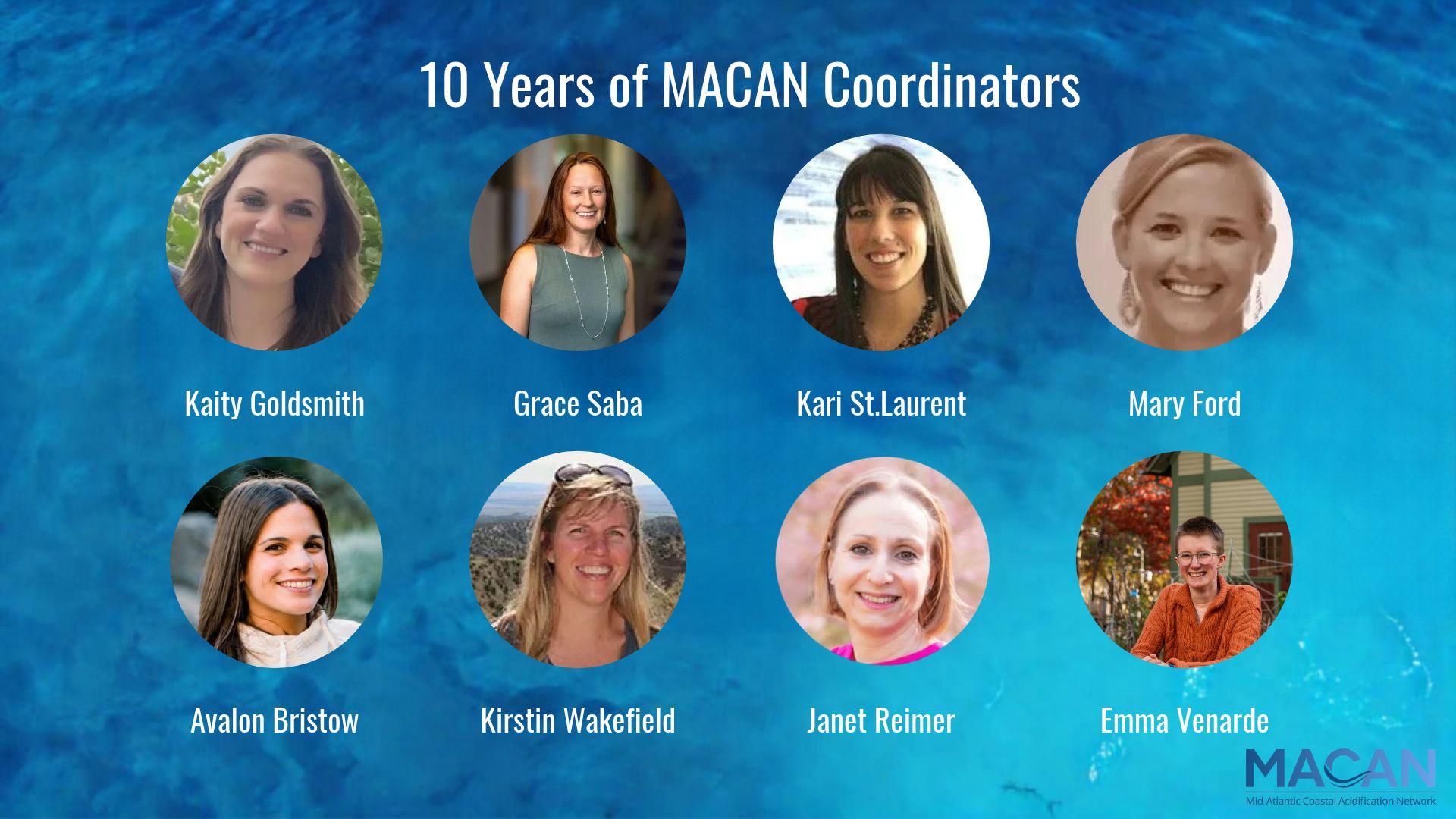
Kaity Goldsmith is one of the founding MACAN coordinators and coordinated MACAN from 2016 to 2019. During her time as MACAN coordinator, she launched the first MACAN website and held the first in-person state of the science workshop. She remembers the initial establishment of the Mid-Atlantic Ocean Data Portal (The Portal) layer for ocean acidification monitoring in the region as MACAN’s greatest achievement during her time. Kaity is also first author on the paper Scientific considerations for acidification monitoring in the U.S. Mid-Atlantic Region. Kaity is now the Intramural Program Coordinator at NOAA OAP.
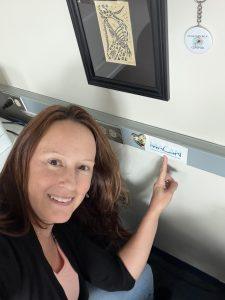 Grace Saba is another founding coordinator of MACAN, and she highlighted another CAN paper that MACAN contributed to: Building the Knowledge-to-Action Pipeline in North America: Connecting Ocean Acidification Research and Actionable Decision Support. Another accomplishment was the work she and Kaity did on a NOAA North Atlantic Regional Team project called VOCAL: Visualizing Ocean and Coastal Acidification Locally to co-develop the conceptual models depicting major drivers of coastal acidification for the Mid-Atlantic and the Northeast. She wanted to give a shout-out to the CANs established before MACAN, as they helped Kaity and Grace immensely with founding MACAN. She is the first author on the paper Recommended priorities for research on ecological impacts of ocean and coastal acidification in the U.S. Mid-Atlantic. Grace mentioned that one of her favorite moments early on was when she and Kaity saw the MACAN logo for the first time. She still has it hung up on her office wall at Rutgers University, where she is a Professor in the Department of Marine and Coastal Sciences.
Kari St.Laurent, who was a MACAN coordinator from 2019 to 2020, noted the two previously mentioned authoritative peer-reviewed papers MACAN published during her tenure on monitoring needs and research priorities as MACAN’s greatest achievements during that time. Former coordinators Kaity and Grace were first authors on each paper. She also wanted to give a shout-out to Nichole Ruiz and the other MACAN fellows that she has recently mentored as part of her ongoing commitment to MACAN. Kari is now the Chief of the Harmful Algal Bloom Forecasting Branch at NOAA’s National Centers for Coastal Ocean Science.
As coordinators from 2020 to 2023, Mary Ford and Avalon Bristow secured Inflation Reduction Act funding for extensive future MACAN projects, including funding for wonderful fellows and contractors over the last few years. Mary is now the Deputy Director of MARCOOS, and Avalon is now the Executive Director of the Mid-Atlantic Regional Council on the Ocean (MARCO).
Kirstin Wakefield was a Stakeholder Outreach Liaison from 2018 to 2023, then served as a MACAN coordinator from 2023 to 2025. Some of the major highlights from her tenure include the first iteration of the Coastal Acidification Curriculum, the 4-part video series on coastal and ocean acidification (COA) in the Mid-Atlantic, and our partnership with the Chesapeake Bay National Estuarine Research Reserve to develop teacher workshops connecting COA, aquaculture, and STEM opportunities. She also noted strengthened partnerships with shellfish growers/aquaculture in the region and MACAN’s contributions to the national CAN paper on Management Considerations for Establishing a Coastal Acidification Monitoring System. Another highlight was MACAN fellow Carly LaRoche’s comprehensive COA Monitoring Inventory Analysis. Kirstin is now the Senior Program Manager for Special Projects at the Mid-Atlantic Regional Association Coastal Ocean Observing System (MARACOOS).
Current coordinators Janet Reimer (MARCO) and Emma Venarde (MARACOOS) want to thank all of the past coordinators for the amazing work and continued support for MACAN! Amidst all of the accomplishments each MACAN coordinator highlighted, one thing remained consistent: the most important part of MACAN is the people and partners who make our organization possible. A huge thank you to all of our MACAN fellows, as well as to our partners: the other six national CANs, MARACOOS, MARCO, OAP, and the OA Alliance. We look forward to another decade as the Mid-Atlantic’s central resource for COA knowledge and tools.
Get Involved
If you are interested in learning more about MACAN and the work we do, please sign up for our monthly newsletter. You can also read our 2024 to 2028 Work Plan.


The Mid-Atlantic Coastal Acidification Network. All Rights Reserved.