

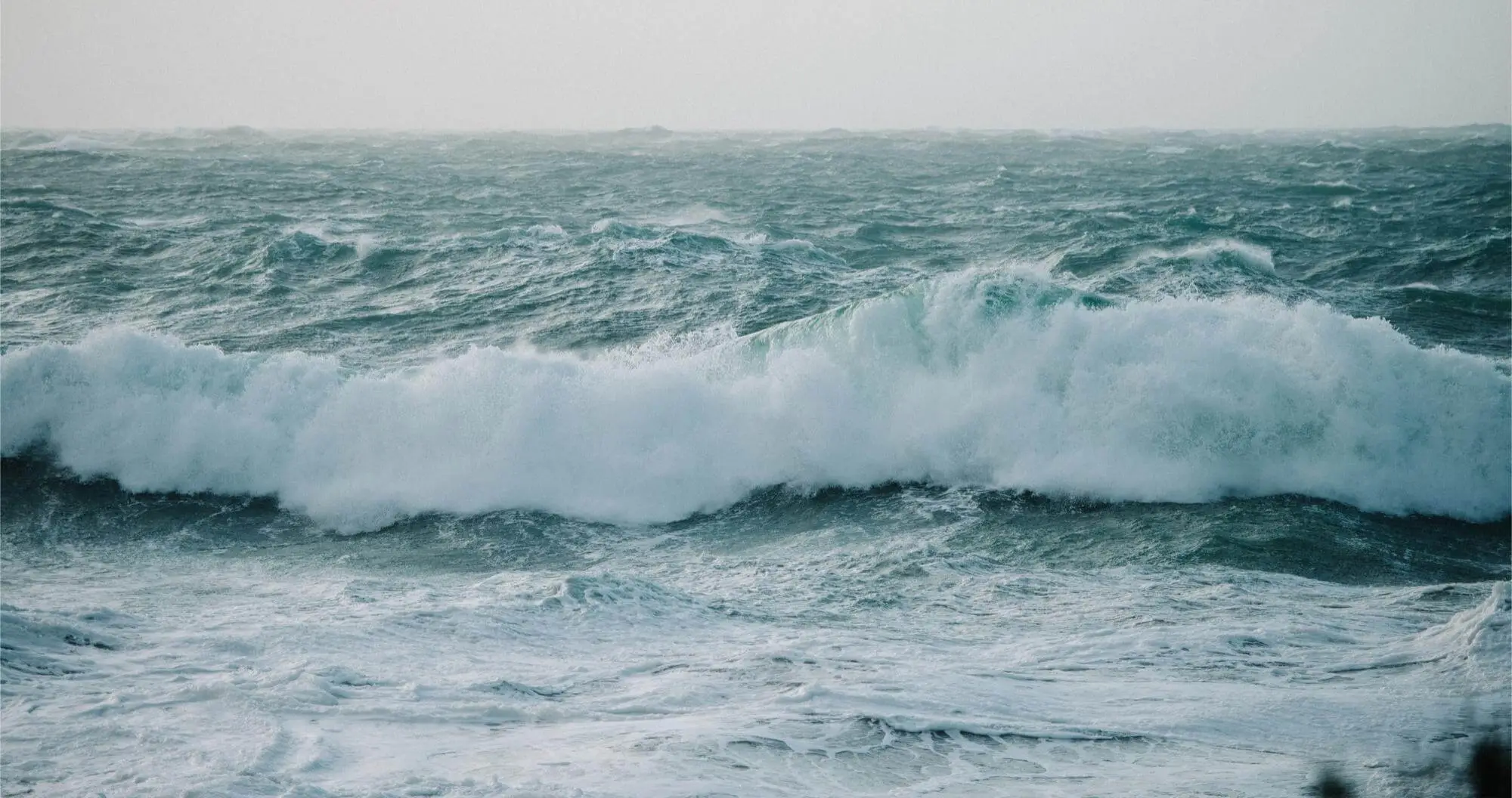
Aragonite Mineral Saturation State (Ω)
About
If two of the four carbonate chemistry parameters have been measured in combination with salinity and temperature, calcium carbonate saturation state (Ω) can be derived. Saturation state is a measure of how much calcium carbonate is dissolved in seawater and therefore serves as a key indicator of ocean acidification.
At equilibrium, Ω = 1
At equilibrium, Ω = 1
Saturated, Ω > 1: Calcium carbonate will form
Undersaturated, Ω < 1: Calcium carbonate will dissolve.

Mineral Forms
Saturation state can be computed for different mineral forms of calcium carbonate, including calcite and aragonite. Larvae and juvenile life stages of shelled organisms often use aragonite as their primary shell building material; for this reason, the saturation state of aragonite is particularly important to track.

Photo: NOAA Pacific Marine Environmental Laboratory
Pteropod shell dissolution occurs over the course of 45 days when exposed to predicted 2100 levels of pH and saturation state.
Get Involved
If you are interested in learning more about MACAN and the work we do, please sign up for our monthly newsletter. You can also read our 2024 to 2028 Work Plan.

SUBSCRIBE TO OUR NEWSLETTER
Sign Upfollow us on social


The Mid-Atlantic Coastal Acidification Network. All Rights Reserved.